THE CDS FROM THE AIR FORCE!
History had shown that the evolution of the Armed Forces of all Nations started with the land forces followed by the navy and air force. The main reason is the TECHNOLOGY.
The first recorded sea battles was in 1210 BC in Medditerranean Sea. It relates with the most of history of scientific civilisation started in Greece and Macedonean. The first recorded naval battles in ancient China was in 481-221 BC (ref: wikipedia.com)
The first aviation force in the world was the Aviation Militaire of the French Army formed in 1910, which later became L'Armee de l'Air. During the Italo-Turkish War, Italy employed aircraft for teh first ever in the world for reconnaissance and bombing missions against Turkish position on Lybian territory. This war also featured air attacks by airplanes and dirigible airships. In WW I, Germany, Italy, French, British and Turkish Ottoman Empires all possessed significant forces of bombers and fighters.
The first independent air forces (separated from the army) was the British Royal Air Force (RAF) whicj was founded in 1 April 1918. The RAF was the amalgamation of British Army's Royal Flying Corps and Royal Naval Air Service.
The history of the Nation's Armed Forces is close related with the appointment of the Chief of Armed Forces or in some countries called Chief of Defence Forces.
The Chief of Defence (CHOD) is the highest ranked commissioned officer of a nation's Armed Forces. The term Chief of Defence can be difference in the formal national designation in difference nations or countries. The term Chief of Defence Staff (CDS) is commonly use within NATO and European Union nations. Some Armed Forces organization use the different terms such as Chief of Defence Forces (CDF), Chief of Armed Forces (CAF), Commander-in-Chief (C-I-C), Chief of Armed Forces Staff (CAFS), Chief of General Staff (CGS), Supreme Commander, Commander of Defence Forces or something else. In fact in some countries, the appointment of the Chairman of the Joint Chief of Staff is the highest position in the Defence Forces organization (example: USA).
Some unique terms were also use for this position, such as Inspector General of Bundeswehr (Germany), Chief of National Defence General Staff (Greece), Commander of National Armed Forces (Latvia), Commanding General of PLA General Staff (PRC) etc.
And, Indian Armed Forces is unique! They do not have the CDF or equivalent. The Chief of Army, Navy and Air Force running their roles and function independently. They only have the Chief of Staff Committee where the Chairman is the most senior among the service Chiefs.
Until today, most of the Chief of Armed Forces in the world are the Army Officers. The rational is the armies are the biggest and most senior forces in those countries.
After the WW II, some of the countries gave way to the Naval and Air Force Officers to become the Head of Armed Forces.
I use the term "AIRMEN" as the title of this page is not referring to the 'other ranks' in the Air Force. Airmen here refers to 'the member of the Air Force, includes the Officers and the Other Ranks.
British Armed Forces
The RAF was the first modern and structured Armed Forces organization headed by the Air Force officer when Marshall of the RAF Sir William Forster Dickson being appointed as the first Chief of Defence Staff of the United Kingdom in 1959.

The post of CDS was created in 1959 to reflect the new concept of joint operations that had come to the fore of WW 2. The first incumbent was Marshall of the RAF (5 star General) Sir William Dickson. Prior to the creation of the post, he had served as the Chairman of the Chief of Staff Committee from 1956. Before 1956, although no permanent post of Chairman existed, the three service chiefs took it in turn to act as chairman at meetings.
For the post's inception until the mid-to-late 1970s, CDS appointment were granted on a strict rational basis between the three service' Chief. The first break in rotational order was precipitated by the unexpected death of Marshall of the RAF Sir Andrew Humphrey on 24 Jan 1977. He was in the office for only 92 days.
The 16th CDS, Field Marshall Sir Peter Inge was the last CDS in the rank of 5 star General. After his tenure ended on 1 Apr 97, the rank of CDS was down graded to 4-star General (or equivalent).
The SEVEN from the total number of 23 CDS, who came from the Air Force are:

ACM Sir Jock Stirrup
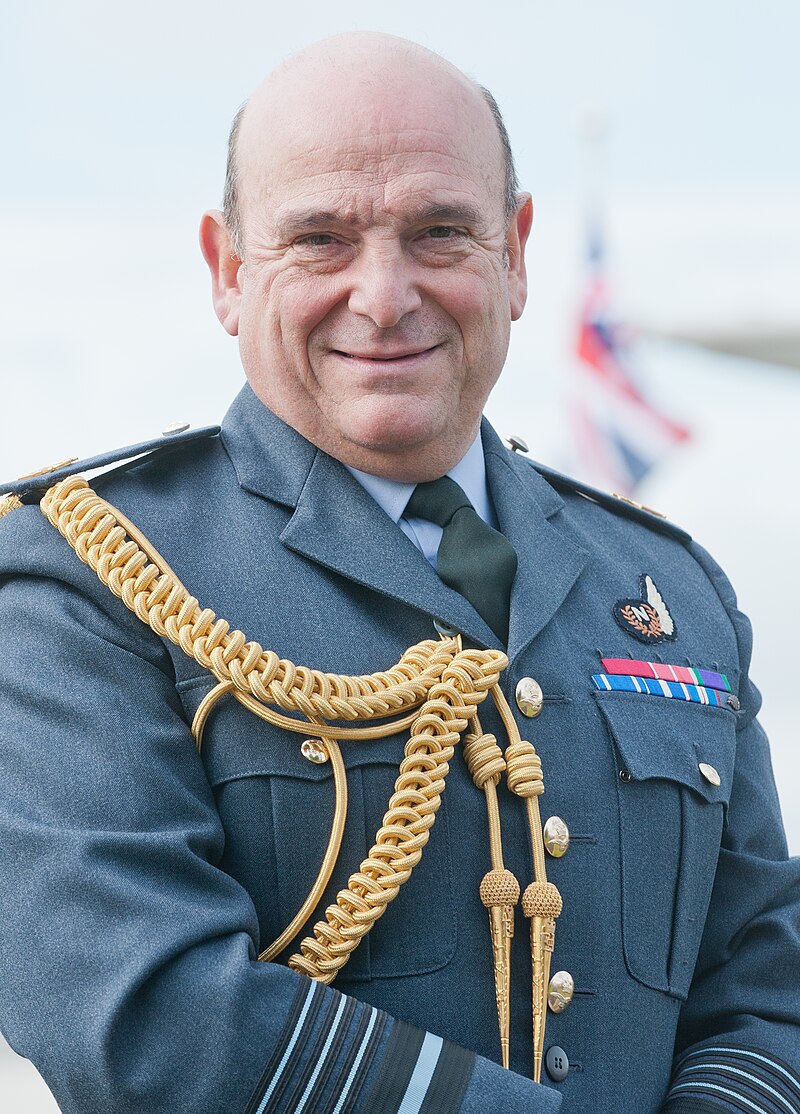
ACM Sir Stuart Peach
Malaysian Armed Forces
The first and so far, the only Air Force officer became the Chief of Malaysian Defence Forces was Gen Tan Sri Azizan bin Ariffin RMAF. He took the office as 17th CDF in Sep 2009 and served until 2011. Prior to that, Azizan was the Chief of the Air Force from Sep 2006 till Sep 2009.
Since the post created in 1959 (formerly known as Chief of Armed Forces Staff (Ketua Turus Angkatan Tentera) all the 19 CDF were from the Army except 15th CDF (from RMN) and 17th Chief, Azizan.

Tan Sri Azizan Ariffin
Indonesian National Forces
The post of Commander-in-Chief of the Indonesian National Defence Forces (Panglima Tentera Nasional Indonesia) was established in 1945. The post was initially knwon as Panglima Besar Tentera Keamanan Rakyat RI. In 1950 the designation changed to Kepala Staf Angkatan Perang until 1968 when it was changed to Panglima Angkatan Bersenjata Republik Indonesia (ABRI). In 1999 it was changed again to be Panglima TNI.
Since it was created, the are 19 holders and out of them only two from the Navy and only ONE Air Force Officer (TNI-AU) was given the honour to hold the appointment of Panglima Tentera Nasional Indonesia (TNI)). He was the Marsekal TNI-AU Djoko Suyanto who was in command the TNI from Feb 2006 till Dec 2007. Prior to this appointment Djoko was the Kepala Staf Angkatan Udara (KASAU) Republik Indonesia. Djoko was the 15th Panglima TNI.
.

Australian Defence Forces (ADF)
Chief of the Defence Force (CDF) is the most senior appointment in the Australian Defence Force (ADF). The CDF commands the ADF under the direction of the Minister of Defence. The appointment shares control of the Australian Defence Organisation in a coequal arrangement (a "diarchy") with the Secretary of the Department of Defence, the most senior public servant in the Department of Defence.
When the post was created in 1958, it was known as the Chairman of the Chief of Staff Committee until it was changed to Chief of Defence Force Staff in 1976 and finally changed to CDF in 1984.
The
CDF is appointed by the Governor-General on the advice of
his/her ministers. The appointment is politically neutral, as are all military
positions, and not affected by a change of government.
The four CDF from the Air Force are:

Singapore Armed Forces (SAF)

 Lt Gen Ng Chee Meng
Armed Forces of the Phillipines(AFP)
Before the Independence of the Phillipines, the nation was under the Spanish soveriegnty. In 1998 The Revolutionary Movement of Phillipines declared its independence from the Spanish. However it was not recognised by the Spanish. Spanish ceeded Phillipines to the United States sovereignty under the Treaty of Paris, 1898.
The AFP were created as a result of Dec 21, 1935 National Defense Act No. 1. However the establishment of AFP still under the control of the US until US granted Independence to the Phillipines in 1946 where the nation has its autonomous Armed Forces.
The head of AFP called 'Chief of Staff of the AFP'. Since its independence in 1946, the AFP has 43 COS. Out of them only FIVE are from the Phillipine Air Force (PAF).


Gen Eduardo Oban Jr
Royal Thai Armed Forces (RTAF)
The official organisation of RTAF was established in 1852 at the behest og King Mongkut who needed an European trained military force in order to thwart any western threat and any attempt at colonisation.
Since 1932, when the military with the help of civilians decided to overthrow the system of obsolute monarchy and instead created a constitutional system, the military has dominated and been in control of Thailand's politics. The RTAF provided many Prime Ministers and carrying out many Coup d'etates.
The RTAF is ostensibly managed by the Ministry of Defence of Thailand, which is headed by the Minister and commanded by the RTAF Headquarters, which in turn is headed by the Chief of Defence Forces (CDF) of Thailand.
Since 1940, there are 30 incumbents of CDF post and only FOUR of them were the member of the Air Force.
New Zealand Defence Forces (NZAF)
The CDF is the appointment by the professional head of NZDF. The post has existed under its present name since 1991. Prior to that, from 1963 tol 1991 the head of NZDFwas known as Chief of Defence Staff. All the incumbents have held three-star General (or equivalent) rank.
Up to today, there are 15 incumbents of CDF and FIVE of the were from New Zealand Air Force:

Sri Lankan Armed Forces (SLAF)
The appointment of Chief of Defence Staff (CDS) of FAF was created in 1999. Since then there were 8 CDS has been appointed to head the French Military and THREE of the incumbents of CDS came from the Sri Lankan Air Force:

ROK Armed Forces (ROKAF)
Since 1959 there were 33 Chairman of JCS has been appointed to be a Chairman of JCS of ROKAF and only ONE from the Air Force (May 1993 - Dec 1994) and one from the Navy (Oct 2013 - Oct 2015):
French Armed Forces (FAF)
The appointment of Chief of Defence Staff (CDS) of FAF was created in 1953. Since then there were 22 CDS has been appointed to head the French Military. Only FIVE of the incumbents of CDS came from the French Air Force:

PAF is founded in 1953. The chain of command of the military is organized under the Chairman of Joint Chiefs of Staff Committee (JCSC) alongside with the Chief of Army, Navy and the Air Force.
The Joint Chiefs of Staff Committee is an administrative body of senior high-ranking uniformed military leaders of the unified Pakistan Armed Forces who advises the c civilian Government of Pakistan, National Security Council, Defence Minister, President and Prime minister of Pakistan on important military and non-military strategic matters. It is defined by statute, and consists of a Chairman, the military chiefs from Army, Navy and the Air Force: all four-star officers appointed by the President, on the advice of the Prime minister. The chairman is selected based on seniority and merit from the Chiefs of service of the three branches of the Pakistan Armed and Defense Services. Each service chief, outside of their Joint Chiefs of Staff obligations, performs their duty directly for the Ministry of Defence.

Canadian Defence Forces (CDF)

South Africa National Defence Forces

Gen Steven Melville
United States Armed Forces

Spanish Armed Forces
 ]
]
Italian Armed Forces


Lt Gen Freek Meulman RNAF

History had shown that the evolution of the Armed Forces of all Nations started with the land forces followed by the navy and air force. The main reason is the TECHNOLOGY.
The first recorded sea battles was in 1210 BC in Medditerranean Sea. It relates with the most of history of scientific civilisation started in Greece and Macedonean. The first recorded naval battles in ancient China was in 481-221 BC (ref: wikipedia.com)
The first aviation force in the world was the Aviation Militaire of the French Army formed in 1910, which later became L'Armee de l'Air. During the Italo-Turkish War, Italy employed aircraft for teh first ever in the world for reconnaissance and bombing missions against Turkish position on Lybian territory. This war also featured air attacks by airplanes and dirigible airships. In WW I, Germany, Italy, French, British and Turkish Ottoman Empires all possessed significant forces of bombers and fighters.
The first independent air forces (separated from the army) was the British Royal Air Force (RAF) whicj was founded in 1 April 1918. The RAF was the amalgamation of British Army's Royal Flying Corps and Royal Naval Air Service.
The history of the Nation's Armed Forces is close related with the appointment of the Chief of Armed Forces or in some countries called Chief of Defence Forces.
The Chief of Defence (CHOD) is the highest ranked commissioned officer of a nation's Armed Forces. The term Chief of Defence can be difference in the formal national designation in difference nations or countries. The term Chief of Defence Staff (CDS) is commonly use within NATO and European Union nations. Some Armed Forces organization use the different terms such as Chief of Defence Forces (CDF), Chief of Armed Forces (CAF), Commander-in-Chief (C-I-C), Chief of Armed Forces Staff (CAFS), Chief of General Staff (CGS), Supreme Commander, Commander of Defence Forces or something else. In fact in some countries, the appointment of the Chairman of the Joint Chief of Staff is the highest position in the Defence Forces organization (example: USA).
Some unique terms were also use for this position, such as Inspector General of Bundeswehr (Germany), Chief of National Defence General Staff (Greece), Commander of National Armed Forces (Latvia), Commanding General of PLA General Staff (PRC) etc.
And, Indian Armed Forces is unique! They do not have the CDF or equivalent. The Chief of Army, Navy and Air Force running their roles and function independently. They only have the Chief of Staff Committee where the Chairman is the most senior among the service Chiefs.
Until today, most of the Chief of Armed Forces in the world are the Army Officers. The rational is the armies are the biggest and most senior forces in those countries.
After the WW II, some of the countries gave way to the Naval and Air Force Officers to become the Head of Armed Forces.
I use the term "AIRMEN" as the title of this page is not referring to the 'other ranks' in the Air Force. Airmen here refers to 'the member of the Air Force, includes the Officers and the Other Ranks.
British Armed Forces
The RAF was the first modern and structured Armed Forces organization headed by the Air Force officer when Marshall of the RAF Sir William Forster Dickson being appointed as the first Chief of Defence Staff of the United Kingdom in 1959.
Marshall of the RAF Sir William Dickson
The post of CDS was created in 1959 to reflect the new concept of joint operations that had come to the fore of WW 2. The first incumbent was Marshall of the RAF (5 star General) Sir William Dickson. Prior to the creation of the post, he had served as the Chairman of the Chief of Staff Committee from 1956. Before 1956, although no permanent post of Chairman existed, the three service chiefs took it in turn to act as chairman at meetings.
For the post's inception until the mid-to-late 1970s, CDS appointment were granted on a strict rational basis between the three service' Chief. The first break in rotational order was precipitated by the unexpected death of Marshall of the RAF Sir Andrew Humphrey on 24 Jan 1977. He was in the office for only 92 days.
The 16th CDS, Field Marshall Sir Peter Inge was the last CDS in the rank of 5 star General. After his tenure ended on 1 Apr 97, the rank of CDS was down graded to 4-star General (or equivalent).
The SEVEN from the total number of 23 CDS, who came from the Air Force are:
- 1st CDS: MRAF Sir William Dickson (1958 - 1959)
- 4th CDS: MRAF Sir Charles Elworthy (1967 - 1971)
- 7th CDS: MRAF Sir Andrew Humphrey (1976 - 1977)
- 9th CDS: MRAF Sir Neil Cameron (Aug 1977 - Aug 1979)
- 13th CDS: MRAF Sir David Craig (Dis 1988 - Apr 1991)
- 15th CDS: MRAF Sir Peter Harding (Dis 1992 - Mac 1994)
- 20th CDS: ACM Sir Jock Stirrup (Apr 2006 - Okt 2010)
- 23rd CDS: ACM Sir Stuart Peach (14 Jul 16 - today)
ACM Sir Jock Stirrup
ACM Sir Stuart Peach
Malaysian Armed Forces
The first and so far, the only Air Force officer became the Chief of Malaysian Defence Forces was Gen Tan Sri Azizan bin Ariffin RMAF. He took the office as 17th CDF in Sep 2009 and served until 2011. Prior to that, Azizan was the Chief of the Air Force from Sep 2006 till Sep 2009.
Since the post created in 1959 (formerly known as Chief of Armed Forces Staff (Ketua Turus Angkatan Tentera) all the 19 CDF were from the Army except 15th CDF (from RMN) and 17th Chief, Azizan.
Tan Sri Azizan Ariffin
Indonesian National Forces
The post of Commander-in-Chief of the Indonesian National Defence Forces (Panglima Tentera Nasional Indonesia) was established in 1945. The post was initially knwon as Panglima Besar Tentera Keamanan Rakyat RI. In 1950 the designation changed to Kepala Staf Angkatan Perang until 1968 when it was changed to Panglima Angkatan Bersenjata Republik Indonesia (ABRI). In 1999 it was changed again to be Panglima TNI.
Since it was created, the are 19 holders and out of them only two from the Navy and only ONE Air Force Officer (TNI-AU) was given the honour to hold the appointment of Panglima Tentera Nasional Indonesia (TNI)). He was the Marsekal TNI-AU Djoko Suyanto who was in command the TNI from Feb 2006 till Dec 2007. Prior to this appointment Djoko was the Kepala Staf Angkatan Udara (KASAU) Republik Indonesia. Djoko was the 15th Panglima TNI.
.
Marsekal TNI Djoko Suyanto
Panglima TNI (Feb 2006 - Dec 2007)
Australian Defence Forces (ADF)
Chief of the Defence Force (CDF) is the most senior appointment in the Australian Defence Force (ADF). The CDF commands the ADF under the direction of the Minister of Defence. The appointment shares control of the Australian Defence Organisation in a coequal arrangement (a "diarchy") with the Secretary of the Department of Defence, the most senior public servant in the Department of Defence.
When the post was created in 1958, it was known as the Chairman of the Chief of Staff Committee until it was changed to Chief of Defence Force Staff in 1976 and finally changed to CDF in 1984.
The position is a
fixed-term appointment of four years. Prior to June 2014, this was three year
appointment. The position is notionally rotated between the three services, (Navy, Army and Air Force), but in practice this has not been the case; of 18 appointees, nine have been from the Army, five from the Navy and four from the
Air Force.
During peacetime, the
CDF is the only four-star
officer in the ADF (Admiral, General,
or Air Chief Marshal). CDF is assisted by the Vice Chief of the Defence Force (VCDF) and the service Chiefs: Chief of Navy (CN), Chief of Army (CA), and Chief of Air Force (CAF), all of whom are three-star officers (VAdm, Lt Gen and Air Marshal).
The four CDF from the Air Force are:
- 3rd CDF: ACM Sir Frederick Scherger (1961 - 1966)
- 10th CDF: ACM Sir Neville MacNamara (1982 - 1984)
- 18th CDF: ACM A. G Angus Houston (2005 - 2011)
- 20th CDF: ACM Mark Binskins (2014 - today)
Air Chief Marshall Mark Binskin (born 1960)
Chief of Australian Defence Forces (1 July 2014 - today)
Singapore Armed Forces (SAF)
The Chief of Defence Force of Singapore is the head of
the Singapore Armed Forces (SAF), who holds the rank of a three-star general or
admiral. The position was created in 1974 as the Chief of General Staff with
the appointment of Winston Choo, and changed to its current name in May 1990.
Prior to the appointment of Choo as Chief of General Staff, the Ministry of
Defence (and before it, the Ministry of Interior and Defence) was in charge of
the SAF. Before the position was created, the head of Singapore's army—which at
that time made up the military—held the position of Director, General Staff.
The President of Singapore has the power to appoint each
new CDF (as well as new heads of each of the three services in the SAF) on the
advice of the Prime Minister of Singapore, who in turn must consult with the
Armed Forces Council, on which the CDF sits. The CDF also maintains a role as
an aide-de-camp to the President.
Since established in 1990, there are eight CDF in office
and only TWO of them are from the Air Force.
Lt Gen Bey Soo Khiang
The 3rd CDF of SAF (1995-2000) was the first Air Force officer appointed to be a CDF

The 8th and current CDF of SAF since Mar 2013
(prior to this, Ng C.M was the Chief of Air Force (10 Dec 2009 - 24 Mar 2013, ironically he succeeded the appointment of Chief of Air Force from his elder brother Maj Gen Ng Chee Khern who commanded the Air Force since 24 Mar 2006) and his younger brother Ng Chee Peng was the Chief of Navy (2010 - 2014).
Armed Forces of the Phillipines(AFP)
Before the Independence of the Phillipines, the nation was under the Spanish soveriegnty. In 1998 The Revolutionary Movement of Phillipines declared its independence from the Spanish. However it was not recognised by the Spanish. Spanish ceeded Phillipines to the United States sovereignty under the Treaty of Paris, 1898.
The AFP were created as a result of Dec 21, 1935 National Defense Act No. 1. However the establishment of AFP still under the control of the US until US granted Independence to the Phillipines in 1946 where the nation has its autonomous Armed Forces.
The head of AFP called 'Chief of Staff of the AFP'. Since its independence in 1946, the AFP has 43 COS. Out of them only FIVE are from the Phillipine Air Force (PAF).
- 7th COS: Lt Gen Pelagio Cruz (1961 - 1962)
- 11th COS: Gen Victor Osias (1967 - 1968)
- 21st COS: Gen Amulfo Acedera (1996 - 1997)
- 27th COS: Gen Benjamin Defensor (2002 - 2003)
- 38th COS: Gen Eduardo Oban Jr (2011)
Gen Eduardo Oban Jr
Royal Thai Armed Forces (RTAF)
The official organisation of RTAF was established in 1852 at the behest og King Mongkut who needed an European trained military force in order to thwart any western threat and any attempt at colonisation.
Since 1932, when the military with the help of civilians decided to overthrow the system of obsolute monarchy and instead created a constitutional system, the military has dominated and been in control of Thailand's politics. The RTAF provided many Prime Ministers and carrying out many Coup d'etates.
The RTAF is ostensibly managed by the Ministry of Defence of Thailand, which is headed by the Minister and commanded by the RTAF Headquarters, which in turn is headed by the Chief of Defence Forces (CDF) of Thailand.
Since 1940, there are 30 incumbents of CDF post and only FOUR of them were the member of the Air Force.
- 4th CDF: ACM Thawee Chulasapya (1973 - 1974)
- 7th CDF: ACM Kamon Dachatungkha (1976 - 1977)
- 16th CDF: ACM Kaset Rojananin (1992)
- 17th CDF: ACM Voranat Aphichari (1992 - 1994)
New Zealand Defence Forces (NZAF)
The CDF is the appointment by the professional head of NZDF. The post has existed under its present name since 1991. Prior to that, from 1963 tol 1991 the head of NZDFwas known as Chief of Defence Staff. All the incumbents have held three-star General (or equivalent) rank.
Up to today, there are 15 incumbents of CDF and FIVE of the were from New Zealand Air Force:
- 4th CDF: AM Sir Richard Bolt (1971 - 1976)
- 6th CDF: AM Sir Ewan Jammieson (1983 - 1986)
- 7th CDF: AM David Craig (1986 - 1987)
- 11th CDF: AM Carey Adamson (1999 - 2001)
- 12th CDF: AM Bruce Reid Ferguson (2001 - 2006)
Air Marshal Bruce R. Ferguson
Sri Lankan Armed Forces (SLAF)
The appointment of Chief of Defence Staff (CDS) of FAF was created in 1999. Since then there were 8 CDS has been appointed to head the French Military and THREE of the incumbents of CDS came from the Sri Lankan Air Force:
- 4th CDS: ACM Donal Perera VSV USP (2005 - 2009
- 6th CDS: ACM Roshan Goonetileke (2009 - 2011)
- 8th CDS: ACM Kolitha Gunathilake (2015 - present)
Air Chief Marshal Kolitha Gunathilake currently functions
as the Chief of Defence Staff. The CDS is the Chairman of a Committee made up
of service commanders and is a member of the National Security Council.
ACM A. Kolitha Gunatilleke
ROK Armed Forces (ROKAF)
Joint Chiefs of Staff of Republic of Korea is a group of
Chiefs from each major branch of the armed services in the Republic of Korea
Armed Forces. Unlike his/her United States counterpart, the Chairman of the
Joint Chiefs of Staff has Operational Control over all military personnel of
the Armed Forces. The National Command Authority runs from the President and
the Minister of Defense to the Chairman Joint Chiefs of Staff and then to
Operational Commands of the service branches, bypassing the Headquarters of
each service branch. Currently there are five Operational Commands in the Army,
two in the Navy (including the Marine Corps) and 1 in the Air Force.
It was created in May 1954, though there had been Supreme
Command of the Armed Force dating from 1948.
All (regular) members of the Joint Chiefs of Staffs are
4-star generals and admirals, though the Deputy Chairman in the past has been
3-star Lieutenant-General or Vice-Admiral intermittently. Traditionally, the
Chairman is chosen from the Army (with one previous and one current exceptions
as October 2013) while the Deputy Chairman is selected from either the Navy or
the Air Force. The Commandant of the Marine Corps, legally subordinate to the
Republic of Korea Navy, can attend the Joint Chiefs of Staff meetings when
examining the matter pertaining to the Marine Corps.
Since 1959 there were 33 Chairman of JCS has been appointed to be a Chairman of JCS of ROKAF and only ONE from the Air Force (May 1993 - Dec 1994) and one from the Navy (Oct 2013 - Oct 2015):
- 19th Chairman of JCS was Jen Lee Yang-Ho (May 1993 - Dec 1994)
French Armed Forces (FAF)
The appointment of Chief of Defence Staff (CDS) of FAF was created in 1953. Since then there were 22 CDS has been appointed to head the French Military. Only FIVE of the incumbents of CDS came from the French Air Force:
- 7th CDS: Gen Andre Martin (1961 - 1962)
- 9th CDS: Gen Michel Fourquet (1968 - 1971)
- 10th CDS: Gen Francois Maurin (1971 - 1975)
- 14th CDS: Gen Jean Sailniez (1985 - 1987)
- 17th CDS: Gen Jean-Phillipe Douin (1995 - 1998)
Gen Jean-Phillipe Douin
Pakistan Armed Forces (PAF) PAF is founded in 1953. The chain of command of the military is organized under the Chairman of Joint Chiefs of Staff Committee (JCSC) alongside with the Chief of Army, Navy and the Air Force.
The Joint Chiefs of Staff Committee is an administrative body of senior high-ranking uniformed military leaders of the unified Pakistan Armed Forces who advises the c civilian Government of Pakistan, National Security Council, Defence Minister, President and Prime minister of Pakistan on important military and non-military strategic matters. It is defined by statute, and consists of a Chairman, the military chiefs from Army, Navy and the Air Force: all four-star officers appointed by the President, on the advice of the Prime minister. The chairman is selected based on seniority and merit from the Chiefs of service of the three branches of the Pakistan Armed and Defense Services. Each service chief, outside of their Joint Chiefs of Staff obligations, performs their duty directly for the Ministry of Defence.
Following the Hamoodur Rahman Commission, the Joint Chiefs of Staff Committee does not
have operational command authority. Instead, the Joint Chief of Staff Committee
is a principal military advisory body, and coordinates command operations
between the services. The Committee
is headed by the four-star officer who
is designated as the Chairman Joint
Chiefs of Staff Committee (CJCSC). The chairman is
the de Jure Commander in
chief of all services of thePakistan Defense
Forces,
but he does not have operational authority over combatant forces, which report
directly to their Chiefs of Staff.
Since its establishment in 1953, among the 17 Chairman of JSSC, only ONE (the 8th) was from the Air Force.
Israel Defence Forces (IDF)
Since its establishment in 1953, among the 17 Chairman of JSSC, only ONE (the 8th) was from the Air Force.
- Air Chief Marshall Farooq Feroze Khan (Nov 1994 - Nov 1997)
Israel Defence Forces (IDF)
The Chief of the General Staff, also known as the
Commander-in-Chief of the Israel Defense is the Supreme Commander and Chief
of Staff of the Israel Defense Forces (IDF).
At any given time, the Chief of Staff is the only active officer holding
the IDF's highest rank, which is Lt Gen (The lone exception to this rule occurred
during the Yom Kippur War, when former Chief of Staff Haim Bar-Lev, who was a government member at the moment of war outbreak, was brought out of
retirement and installed as chief of Southern Command. For a brief period, he
and Chief of Staff David Elazar were both in active service
with the rank of Lt Gen.
The IDF is an
integrated force, ranks are the same in all services. It has
a slightly compacted rank structure; for instance, the Chief of Staff is seemingly only equivalent to a Lt Gen (NATO
OF-8) in other militaries.
The supreme command rank in the military is that
of the Chief of the General Staff. The Chief of the General Staff is to be placed under the authority of the Government and
subordinate to the Defense Minister.
The Chief of the General Staff is to be appointed by the government, according to the recommendation of the Defense Minister. The Chief of Staff is formally appointed once every three years, with the government often extending the term to four years, and in some occasions, even five. As of June 18, 2013, the Chief of General Staff is Benny Gantz.
The Chief of the General Staff is to be appointed by the government, according to the recommendation of the Defense Minister. The Chief of Staff is formally appointed once every three years, with the government often extending the term to four years, and in some occasions, even five. As of June 18, 2013, the Chief of General Staff is Benny Gantz.
Given the importance of the IDF in Israeli society, the Chief of Staff
is an important public figure in Israel. Former Chiefs of Staff often parlay
the prominence of their position into political life, and sometimes the
business world. Two Chiefs of Staff (Yitzak Rabin and Ehud Barak) have become PM of Israel and nine
others (Yigael yadin, Moshe dayan, Tzvi Tzur, Haim Bar-Lev, Mordechai Gur, Rafael Eitan, Amnon Lipkin-Shahak, Shaul Mofaz dan Moshe Yaalon) have served in the Knesset. Of these, only Tzur did not get appointed to the Cabinet. Five former Chiefs of Staff (Dayan, Rabin, Barak, Mofaz, and Ya'alon) held the
position of Defense Minister, widely considered to be
the most powerful ministerial post in the country and the immediate civilian superior of
the Chief of Staff; of these, Mofaz is the only one to serve as Defense
Minister over his immediate successor as Chief of Staff (in Mofaz's case,
Ya'alon). Moshe Dayan served also as Foreign Minister. Soon after his
discharge, Dan Halutz became the CEO of a prestigious car importer.
Since the creation of the appointment in 1947 until today, 20 Chief of Staff of IDF has been appointed and ONLY ONE was from the Israeli Air Force, i.e; Lt Gen Dan Halutz who commanded the IDF from 2005 till 2007 as the 18th COS.

Lt Gen Dan Halutz, the only Air Force officer became the Supreme Commander of the IDF
The Chief of Defence Staff (CDS) is the second most senior member of the Canadian Forces and the head of the Armed Forces Council, having primary responsibility for command, control and administration of the forces. The position is held by a senior member of one of the three main branches of the Canadian Forces.
Before 1964, the position of the Chairman of Joint Chief of Staff Committee became the coordinator of joint activities of the three services. However the existence of the CJCSC had a loose coordination function, although it lacked the command and control responsibilities of the later position of CDS. The appointment was abolished in 1964 and replaced by the post of CDS in accordance with the White Paper presented by the MINDEF, Paul Hellyer in August 1964. The CDS is to head all of Canada's military forces, backed by the Defence HQ that was integrated and restructured 6 functional command. In May 1967 the Parliament passed a Bill C-243 to dissolved the 3 armed services and created the Canadian Forces, under the command of CDS (with effective from 1 Feb 1968). All the three services were merged to be a single Canadian Forces.
In 2011, the 3 functional commands, i.e: Maritime Command, Land Force Command and Air Command were reinstated to become Royal Canadian Navy, Canadian Army and Royal Canadian Air Force respectively. All the three Commanders report to the CDS.
The CDS follows in rank only the Commander-in-Chief of Canadian Forces, who appoints the CDS. The C-in-C of Canadian Forces-the Canadian Monarch, represented by the Governor General - typically acts only on the advice of his/her Ministers of the Crown, meaning the CDS reports directly to the Minister of National Defence.
Since the post of CDS was established 1964 (16 holder), there were SEVEN CDS appointed from the Air Command or Royal Canadian Air Force.
Before 1964, the position of the Chairman of Joint Chief of Staff Committee became the coordinator of joint activities of the three services. However the existence of the CJCSC had a loose coordination function, although it lacked the command and control responsibilities of the later position of CDS. The appointment was abolished in 1964 and replaced by the post of CDS in accordance with the White Paper presented by the MINDEF, Paul Hellyer in August 1964. The CDS is to head all of Canada's military forces, backed by the Defence HQ that was integrated and restructured 6 functional command. In May 1967 the Parliament passed a Bill C-243 to dissolved the 3 armed services and created the Canadian Forces, under the command of CDS (with effective from 1 Feb 1968). All the three services were merged to be a single Canadian Forces.
In 2011, the 3 functional commands, i.e: Maritime Command, Land Force Command and Air Command were reinstated to become Royal Canadian Navy, Canadian Army and Royal Canadian Air Force respectively. All the three Commanders report to the CDS.
The CDS follows in rank only the Commander-in-Chief of Canadian Forces, who appoints the CDS. The C-in-C of Canadian Forces-the Canadian Monarch, represented by the Governor General - typically acts only on the advice of his/her Ministers of the Crown, meaning the CDS reports directly to the Minister of National Defence.
Since the post of CDS was established 1964 (16 holder), there were SEVEN CDS appointed from the Air Command or Royal Canadian Air Force.
- 1st CDS: ACM Frank Robert Miller (1964 - 1966)
- 3rd CDS: Gen Frederick Ralph Sharp (1969 - 1972)
- 7th CDS: Gen Gerard Charles Edouard Theriault (1983 - 1986)
- 8th CDS: Gen Paul David Manson (1986 - 1989)
- 12th Gen Joseph Edouard Jean-Boyle (1996)
- 14th CDS: Gen Raymond Henault (2001 - 2005)
- 17th CDS: Gen Thomas J. Lawson (2012 - 2015)
Lt Gen Thomas J. Lawson
From 1958 until the first post-apartheid election in
1994, the present-day South African National Defence Force
(SANDF) was known as the South African Defence Force
(SADF). From 1912 to 1958, the military was known as the Union Defence
Force (UDF).
The Defence Force consists of the SA Army, SA
Navy, SA Air Force and SA Medical Service (later was renamed SA
Military Health Service). The Chief of the SANDF is the senior
military commander and the chiefs of the four services, in addition to the
chiefs of Joint Operations, Defence Intelligence, and Corporate Staff, report
to him.
The UDF consisted initially of land forces. An
aviation corps was formed in 1915 and replaced by the South African Air Force
in 1920. A naval branch was added in 1922, and the South African Division of
the Royal Navy Volunteer Reserve was incorporated into it in 1942.
The UDF was renamed 'South African Defence Force' in
November 1958. The Commandant General's title was then changed to
'Commandant General SADF'. It was changed to 'Chief of the SADF' in July 1973.
After South Africa's first democratic elections the SADF became the
SANDF.
The SADF amalgamated with the Azanian People's Liberation
Army, Umkhonto we Sizwe and the homeland defence forces to form the SANDF in
1994.
Since the defence forces of the South Africa
(UDF/SADF/SANDF) was established in 1922 the total incumbents of the Chief of
Defence Forces is 18. Out of them only TWO were from the Air Force:
- 2nd Chief: Gen Sir Hesperous Andrias (Pierre) van Ryneveld (May 1933 - May 1949)* - he commanded the UDF for 16 years). Prior to that he was the Chief of Air Force from 1920 till 1933.
- 7th Chief: Gen Stephen Melville (Nov 1958 - Dec 1960)
Gen Steven Melville
United States Armed Forces
The Chairman of the Joint Chiefs of Staff (CJCS) is, by
U.S. law, the highest-ranking military officer in the United States Armed
Forces[1] and is the principal military advisor to the President of the United
States, the National Security Council, the Homeland Security Council, and
the Secretary of Defense. While the Chairman of the Joint Chiefs of Staff
outranks all other officers, he does not have operational command authority
over the Armed Forces; however, the Chairman does assist the President and the
Secretary of Defense in exercising their command functions.
The Chairman convenes the meetings and coordinates the
efforts of the Joint Chiefs of Staff (JCS), an advisory body within the
Department of Defense comprising the Chairman, the Vice Chairman of the Joint
Chiefs of Staff, the chiefs of staff of the United States Army and United
States Air Force, the Chief of Naval Operations, the Commandant of the Marine
Corps, and the Chief of the National Guard Bureau. The Joint Staff is under the
exclusive direction of the Chairman.
Since the position of Chairman of JCS was created in 1949, there were 19 senior military officers were appointed to fill the post, and FOUR of them were from the US Air Force:
Gen Richard B, Myers USAF
Spanish Armed Forces
The position of Chief of Defence Staff (CDS) of Spanish Armed Forces was introduced by the first government of
Felipe Gonzalez in 1984 and replaced the position of Chief of Joint Chiefs
of Staff (JUJEM), which itself had replaced the Chief of the Defence High
Command (Jefe del Alto Estado Mayor) (AEM) in 1979.
The last officer to occupy the post of Chief of the
Defence High Command (AEM) was Lieutenant General Felipe Galarza, from July to
September 1977.
The last officer to occupy the position of Chief of Joint
Chiefs of Staff (JUJEM) was Lieutenant General Alvaro Lacalle Leloup, from 1982
to 1984.
The AEM was replaced by the JUJEM in May 1980, before the
creation of the position of JEMAD in early 1984 which took over many of the
functions previously under the responsibility of the JUJEM.
Since established in 1984, there were 10 holders of that appointment, and out of them, four from the Navy and two from the Air Force.
- 5th CDS: General Santiago Valderas Cañestro (26 Jul 1996 - 15 Dec 2000)
- 8th CDS: General José Julio Rodríguez Fernández (18 Jul 2008 - 30 Dec 2011)
]
General José Julio Rodríguez Fernández
Italian Armed Forces
The Chief of the Defence Staff of Italy refers to the
Chiefs of the Defence Staff of the Italian Armed Forces. The post was
established in 1925. Until date (2017), 28 appointees were holding the
appointment. Out of them, 6 were from the Marine Militairre (Navy) and only two
form the Air Force.
- 14th CDS: Air Squadron General Francesco Cavalera (1 Feb 1978 - 31 Jan 1980)
- 17th CDS: Air Squadron General Lamberto Bartolucci (13 Oct 1983 - 8 Jan 1986)
The Chief of Defence Staff is the highest ranking
military officer of the Nigerian Armed Forces. It is occupied by the most
senior commissioned officer appointed by the President, Commander-in-Chief of
the Armed Forces of Nigeria. The position was established for the first time
under Nigeria's 1979 constitution.
The Chief of Defence Staff reports to the
commander-in-Chief with administrative supervision of the Honourable Minister
of Defence. It is the duty and responsibility of the CDS to formulate and
execute policies, programmes towards the highest attainment of National
Security and operational competence of the Armed Forces namely; the Army, Navy
and Air Force. The CDS is assisted by the other Service Chiefs: Chief of Army Staff, Chief of Naval Staff and Chief Air Staff.
Since 1980, 16 CDS were appointed by the goverment. Out of them, 2 from the Navy, FOUR from the Air Force and the rest from the Army.
- 7th Air Marshal Al-Amin Daggash (1998–1999)
- 12th ACM Paul Dike (Aug 20, 2008 – Sep 8, 2010)
- 13th ACM Oluseyi Petinrin (Sep 8, 2010 – Oct 5, 2012)
- 15th ACM Alex Sabundu Badeh (Jan 16, 2014 – Jul 13, 2015)
ACM Oluseyi Petinrin
ACM Alex Sabundu Badeh
The Netherlands Armed Forces
The
Chief of Defence (Dutch: Commandant der Strijdkrachten) (CHOD) is the
highest-ranking military officer in the Armed forces of the Netherlands and is
the principal military advisor to the Minister of Defence. On behalf of the
Minister of Defence, he is responsible for operational policy, strategic
planning and for preparing and executing military operations carried out by the
Armed forces. The Chief of Defence is in charge of the Central Staff and is the
direct commanding officer of all the commanders of the branches of the Armed
forces. In this capacity the Chief of Defence directs all the activities of the
Royal Netherlands Army, the Royal Netherlands Navy (RNN) and Royal Netherlands Air
Force (RNAF). He is also in charge of the Royal Netherlands Marechaussee, when it is
operating under the responsibility of the Minister of Defence.
Since the appointment of CDS was established in 1852, there were 36 officers holding the appointment. Out of them, 19 were from the Army, 7 from the Navy, 1 from the Marine and 9 from the Royal Netherland Air Force (RNAF). The Air Force Officers are:
- 9th CDS: Lt Gen Fons Aler (10 Jan 1953 – 1 Oct 1953)
- 11th CDS: Lt Gen Heije Schaper (1 Nov 1957 – 10 May 1959)
- 14th CDS: Gen Hein Zielstra (5 May 1965 – 30 Dec 1968)
- 17th CDS: Gen Robbie Wijting (1 Nov 1973 – 10 Dec 1976)
- 18th CDS: Gen Robbie Wijting (10 Dec 1976 – 1 Nov 1980)
- 25th CDS: Gen Dick Berlijn (5 June 2004 – 5 Sep 2005)
- 26th CDS: Gen Dick Berlijn (5 Sep 2005 – 17 Apr 2008)
- 32nd CDS: Lt Gen Freek Meulman (3 Mar 2008 – 3 Mar 2012)
- 34th Lt Gen Hans Wehren (14 May 2012 – 1 Sep 2015)
Lt Gen Freek Meulman RNAF

Lt Gen Hans Wehren RNAF
The German Armed Forces
The Inspector General of the Bundeswehr (German:
Generalinspekteur der Bundeswehr, GenInspBw), also translated as Chief of Staff
of the Federal Armed Forces, is the highest-ranking military post held by a
commissioned officer in the Bundeswehr, the present-day armed forces of
Germany.
All Inspectors General have been of the rank of a
(four-star) general or admiral, and they head the Führungsstab der
Streitkräfte, the German Defence Staff within the Federal Ministry of Defence,
and is the direct military advisor to the Federal Minister of Defence who is
the peacetime holder of the supreme command authority (German: Inhaber der
Befehls- und Kommandogewalt).
Subordinate to the Inspector General are the commanders
of the branches of the Bundeswehr, the Inspector of the Army, Inspector of the
Air Force, and Inspector of the Navy, and the commanders of the Joint Support
Service and Joint Medical Service.
Since the first Inspector General of the German Armed Forces appointed in 1957, 15 senior officers has been in the position. Out of 14, two Naval Officers and two Air Force Officers were appointed.
- 6th IG: General Harald Wust (21 Dec 1976 - 11 Dec 1978 )
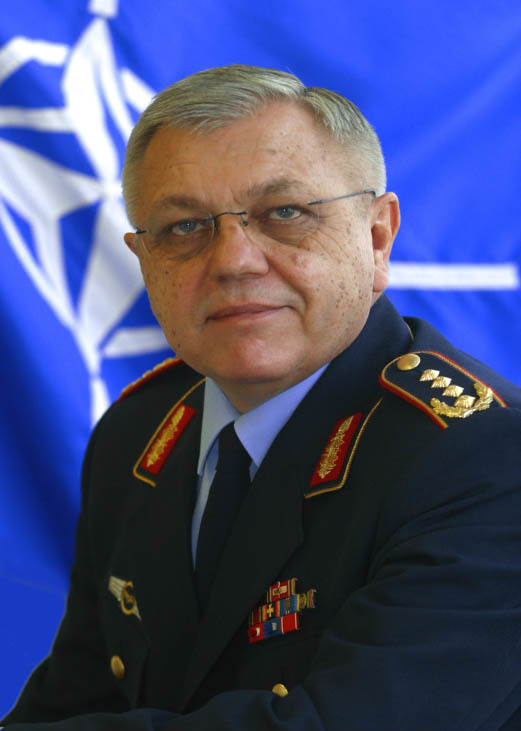
- 13th IG: General Harald Kujat (1 Jul 2000 - 30 June 2002)
- Acting IG: Lt Gen Johann-Georg Dora ( 27 Nov 2009 - 21 Jan 2010)
General Harald Kujat